London: History, Landmarks and Travel Guide
London is the capital of England and the United Kingdom, and one of the great cities of the world. Built on the River Thames, it has grown over two thousand years from a small Roman settlement into a global financial centre, a cultural capital and a home to roughly nine million people. This guide covers the history, the main areas, the best places to visit and the practical details that make a first visit easier.
A Short History of London
The story begins with the Romans, who founded Londinium shortly after their invasion of Britain in the first century. The settlement sat at a crossing point on the Thames, and the first bridge there became the ancestor of today’s London Bridge. Londinium quickly became a busy port and one of the most important cities in Roman Britain, the province of Britannia. Later, a defensive city wall, known as the London Wall, was built around the settlement, and parts of it can still be seen today.
After Roman rule ended, Saxon and Anglo-Saxon communities settled in the area, and the city slowly regained its role as a centre of trade. In 1066 William the Conqueror was crowned at Westminster Abbey, and the Tower of London was built soon after to keep watch over the people and the river.
The 17th century brought disaster and renewal. The Great Fire of 1666 destroyed much of the medieval city, and Sir Christopher Wren led the rebuilding, including the new St Paul’s Cathedral. By the 19th century, London was the largest city in the world, with new railways, docks, bridges and a rapidly growing population. The London Underground opened in 1863 and became the model for urban transport systems across the world. The Second World War brought heavy bombing, and the decades after the war saw major rebuilding and the arrival of people from every part of the globe.
The City of London and the Square Mile
The City of London is the historic heart of the capital, often called the Square Mile because it covers only about one square mile. It is separate from the wider city in many ways. It has its own local government, the City of London Corporation, its own police force and its own head, the Lord Mayor, who is best known for the annual Lord Mayor’s Show.
Today the Square Mile is one of the leading financial centres in the world, home to the Bank of England, the Royal Exchange and many banks and insurers. Yet it is full of history: Roman ruins, medieval churches, the Old Bailey, and the Barbican Estate, a famous example of postwar architecture with its own arts centre. Fewer than ten thousand people live here, but hundreds of thousands work in the area every weekday.
Central London and the West End
Central London is where most visitors spend their time. The West End is the centre of theatre, shopping and nightlife, with Soho, Covent Garden and Leicester Square close together. Trafalgar Square, with Nelson’s Column and the National Gallery, is a natural meeting point and a short walk from Westminster, where Parliament, Big Ben and Westminster Abbey stand beside the river.
Nearby, Buckingham Palace is the official London residence of the monarch, and the Changing of the Guard draws crowds throughout the year. Across the river, the South Bank offers a riverside walk past the London Eye, the Southbank Centre, Tate Modern and Borough Market.
Famous Landmarks You Should Not Miss
- Tower of London: a royal fortress for nearly a thousand years, home to the Crown Jewels.
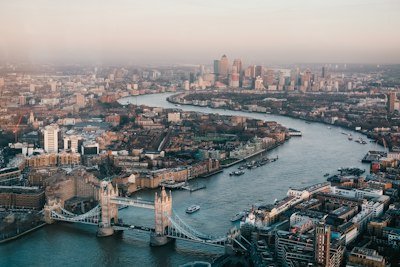
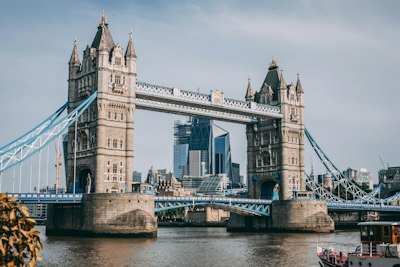
- Tower Bridge: the Victorian bridge that is often mistaken for London Bridge. Both cross the Thames, but they are different structures.
- St Paul’s Cathedral: Wren’s masterpiece, with a dome that dominates the skyline of the city.
- Westminster Abbey: the coronation church and burial place of kings, queens and poets.
- London Eye: a giant observation wheel on the South Bank with wide views across the whole city.
- Canary Wharf: a modern business district on the old docks, a former port that is now a cluster of glass towers.
Museums and Galleries
London is famous for its museums, and many are free to enter. The British Museum holds treasures from every continent, including the Rosetta Stone. The National Gallery houses masterpieces of European painting, the Natural History Museum and the Science Museum are favourites with families, and the Victoria and Albert Museum is a leader in art and design. The British Library, near King’s Cross, holds some of the most important manuscripts in the world, including the Magna Carta. Scholars also use the libraries of the London School of Economics and other colleges of the University of London.
Parks and Open Spaces
Despite its size, London is surprisingly green. The eight Royal Parks, including Hyde Park, Regent’s Park and St James’s Park, give residents and visitors large open spaces in the middle of the urban area. Hyde Park is the best known, with the Serpentine lake and Speakers’ Corner. In north London, Hampstead Heath offers wild woodland, swimming ponds and one of the best views of the skyline. Together, parks and gardens cover a large share of the metropolitan area.
How London Is Governed: Boroughs and the Greater London Authority
Greater London covers about 600 square miles and is divided into 32 London boroughs plus the City of London. Each London borough has its own council, and these local authorities run services such as schools, housing, libraries and waste collection. The wider area is coordinated by the Greater London Authority, led by the Mayor of London, who is responsible for transport, policing priorities and strategic planning across the capital. The City itself is divided into 25 wards, each of which elects representatives to the Corporation.
Getting Around: The London Transport System
The transport system is one of the largest in Europe. The London Underground, known as the Tube, connects most parts of the city, while the Overground, the Elizabeth line, buses, trams and river services fill the gaps. Many places are best explored on foot, especially in the city centre. Use a contactless card or an Oyster card for the cheapest fares, and avoid the busiest trains at rush hour when you can.
Hidden Gems and Tips for a First Visit
If it is your first visit, start with the main sights, then leave time for quieter places. A few hidden gems worth finding:
- Leadenhall Market, a covered Victorian market in the City
- The remains of the London Wall near Tower Hill
- Sir John Soane’s Museum, a house full of curiosities
- The Thames Path at sunrise, before the crowds arrive
- Neal’s Yard, Columbia Road Flower Market and the narrow lanes of the Square Mile on weekends, when they are almost empty
Plan each day around one area to save travel time, book popular attractions in advance, and always carry an umbrella.
Why London Remains a World City
London combines almost two thousand years of history with a modern, multicultural population and a leading role in finance, education, media and the arts. Whether you are exploring the Square Mile, walking across a bridge over the Thames, queuing at a museum or relaxing in a park, there is always something new to find in this remarkable place.